HMAS Perth (I) Memorial
Memorials
Project Menu
Image Gallery
Other
|
Origination- The Glass ArtWork
Stage One: Sourcing and Initial DesignThe process began with the collection of historic photographs of the HMAS Perth (I) and her WWII crew. These invaluable images formed the foundation for the initial design proposal, guiding the creative direction and composition of the memorial glass panels. Early concepts focused on capturing both the ship’s strength and the human stories of the men who served aboard, establishing the visual narrative that would later evolve into the final large-scale design.
Stage Two: Design Approval and Image AcquisitionFollowing approval of the initial design concept, high-definition images were sourced and purchased from the Australian War Memorial (AWM). These archival photographs provided the clarity and authenticity needed for large-scale reproduction, ensuring every face, detail, and scene could be rendered with precision in the final glass composition.
Stage Three: Glass Design RefinementThis stage focused on the detailed redesign of the glass panels using newly captured high-definition images. Each image was carefully adjusted to fit within the outer steel frame while maintaining a seamless visual flow across the entire surface. The process required meticulous blending — removing hard photo edges, ensuring that the steel framework did not intersect or obscure the sailors’ faces, and carefully aligning the imagery to avoid the glass revits shown on the architectural plans. This painstaking process ensured that the final composition reads as one continuous, immersive narrative — a unified story of HMAS Perth (I) and her crew. Side Note: To complete the final design full production scale, a new high-performance computer system was required — a high-end graphics workstation built to handle the immense file sizes and rendering demands was purchased at the studio. Two additional 4 TB external hard drives were installed to manage the temporary processing files ( cache) and maintain stability during editing.
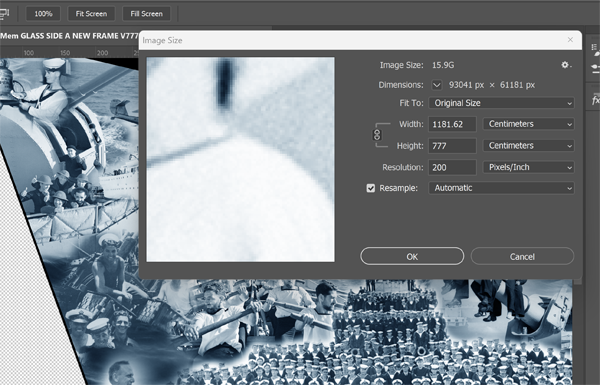
Stage Four: Scale-Up and Colourisation, CMYKWith the glass artwork design finalised, the next step was to scale the entire composition to full size for glass printing and converted to CMKY.
The final image measured 7.7 metres high by 11.8 metres long, prepared as a high-resolution Photoshop file in TIFF large scale format at 200 dpi using specilalised software in-house.
The completed file reached an extraordinary 15.9 GB, reflecting the immense level of detail required to ensure every line, texture, and image transition remained crisp and precise when reproduced at full architectural scale. lastly the entire composition was recoloured from black and white to a subtle blue tone, matching the approved sample and maintaining the calm, reflective tone of the memorial.
Stage Five: Image RestorationAt full scale, every imperfection in the original archival photographs became highly visible. Each image was meticulously restored by hand — removing scratches, dust, and blemishes that would have been amplified at 11 metres wide.
Stage Six: Final ApprovalThe completed design was then submitted to the Committee for final review and approval before being prepared for glass printing.
Stage Seven: File Preparation and DeliveryWith both sides of the glass design completed, the final high-resolution files — Side A and Side B — were saved to an external 2 TB hard drive for safe transfer. These master files were then delivered to the Cooling Brothers for printing directly into the glass, marking the final step in the design and production process before fabrication and installation.
|